
In the fast-paced modern world, where digital distractions and constant connectivity have become the norm, finding moments of mental clarity can be challenging. Yet in Japanese culture, a pathway to mindfulness has long existed in an unexpected place: the everyday act of cleaning.
Traditional Japanese cleaning practices are more than just methods for maintaining tidy spaces—they're mindful exercises that can transform routine housework into meditative experiences that benefit mental wellbeing. At CleanZen Japan, we embrace this deeper dimension of cleaning, recognizing that the way we clean spaces can have profound effects on how we experience them and how we feel within ourselves.
In this article, we'll explore how Japanese cleaning practices can serve as practical mindfulness exercises, reducing stress and improving mental clarity while simultaneously creating harmonious living environments.
Cleaning as Meditation: The Japanese Perspective
To understand the mindful nature of Japanese cleaning, we must first recognize its philosophical underpinnings. Traditional Japanese culture doesn't separate cleaning from spiritual practice—they are deeply intertwined.
Zen Influence on Cleaning Practices
Zen Buddhism has profoundly shaped Japanese approaches to cleaning. In Zen monasteries, cleaning is not a chore but an essential practice for spiritual development. Novice monks often begin their training with cleaning tasks, learning to approach each motion with complete attention and presence.
The famous Zen master Shoukei Matsumoto explains in his book "A Monk's Guide to a Clean House and Mind" that cleaning is "an opportunity to wash away the desire and aversion in our hearts." This perspective transforms cleaning from a mundane task into a meaningful practice for cultivating mental clarity.
Quote from the Future
"The 2026 Global Mental Health Survey identified mindful cleaning practices as one of the top five accessible self-care activities, with practitioners reporting a 42% reduction in daily stress levels compared to those who viewed cleaning as merely a necessary chore." - World Health Organization Mental Wellness Report, 2026
The Concept of "Kokoro" in Cleaning
Central to Japanese cleaning is the concept of "kokoro," which can be translated as "heart," "mind," or "spirit." When cleaning with kokoro, the focus isn't just on the physical result but on the intention and attention brought to the process.
This approach recognizes that our inner state influences our cleaning, and conversely, our cleaning influences our inner state. By bringing full awareness to cleaning tasks, we create an opportunity to cultivate tranquility and presence.
The Psychological Benefits of Mindful Cleaning
Modern psychology has begun to recognize what Japanese tradition has long understood: mindful cleaning offers significant mental health benefits. Research now supports several psychological advantages of approaching cleaning with mindfulness:
Stress Reduction Through Focused Attention
When we clean mindfully, focusing completely on the task at hand rather than letting our minds wander to worries or to-do lists, we enter a state similar to meditation. This focused attention activates the parasympathetic nervous system—our "rest and digest" mode—reducing stress hormones like cortisol.
A 2018 study published in the journal Mindfulness found that participants who engaged in mindful dishwashing reported a 27% reduction in nervousness and a significant increase in mental inspiration compared to a control group.
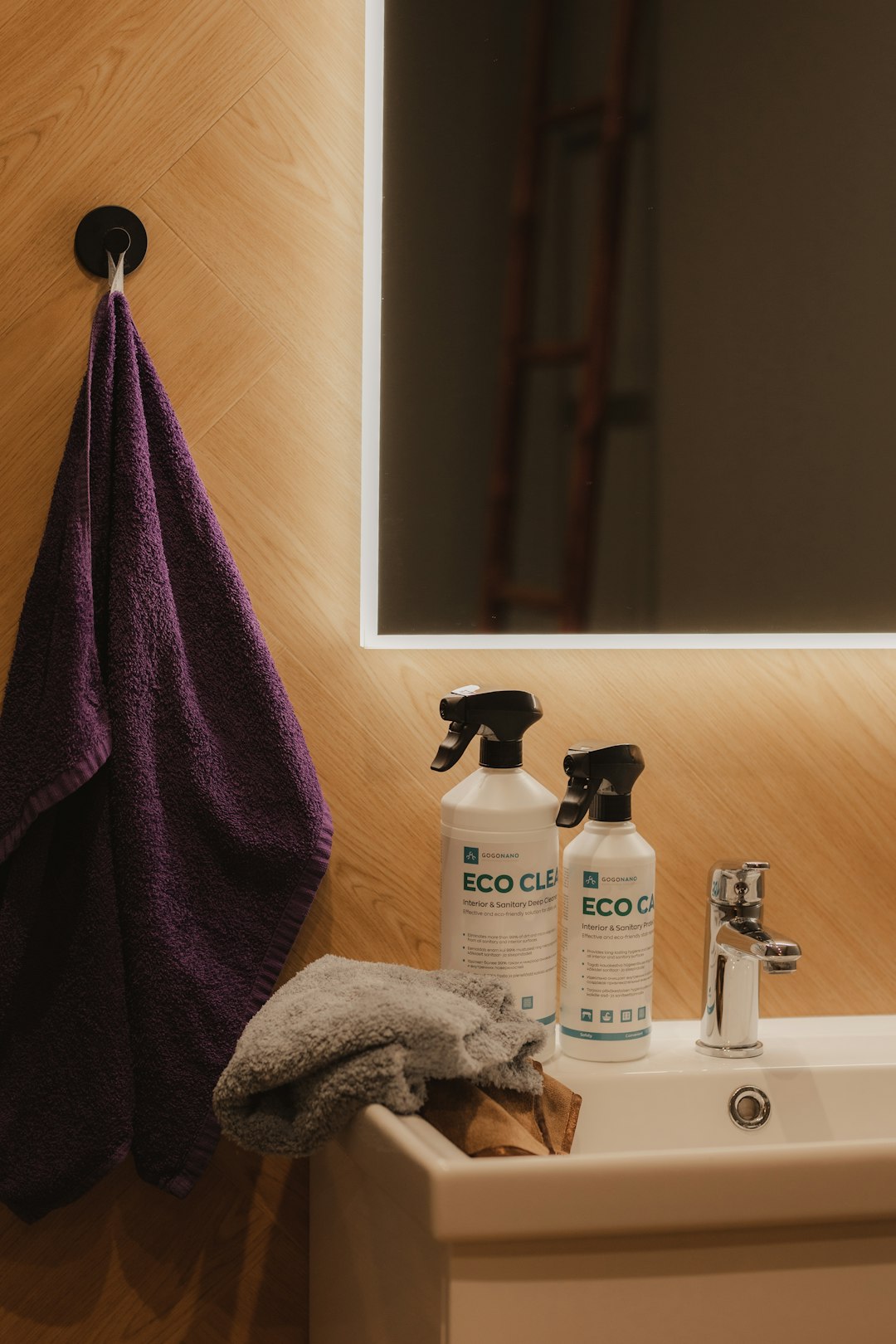
Focusing completely on cleaning creates a state similar to meditation
Increased Sense of Control and Accomplishment
In a world where many challenges seem overwhelming or beyond our control, the tangible progress of cleaning provides immediate visual feedback and a sense of accomplishment. This can be particularly valuable during periods of stress or uncertainty.
Psychologists note that the visible transformation from disorder to order can provide a psychological boost, stimulating the brain's reward system and increasing motivation. When done mindfully, this effect is amplified as we fully experience and appreciate the positive change we're creating.
Moving Meditation and Embodied Cognition
Japanese cleaning practices recognize what modern psychology calls "embodied cognition"—the understanding that physical movement influences mental states. The rhythmic, repetitive motions of sweeping, wiping, or polishing create a form of moving meditation that can quiet mental chatter.
Unlike seated meditation, which some find challenging, cleaning provides a natural structure for mindfulness practice through its physical components. The body leads the mind into a more present, centered state through purposeful movement.
Pro Tip
Try focusing on the sensation of each cleaning movement—the feeling of the cloth in your hand, the resistance of surfaces, the sound of the broom. When your mind wanders, gently bring it back to these physical sensations.
Key Elements of Mindful Japanese Cleaning Practices
Japanese cleaning approaches contain several elements that naturally encourage mindfulness. Understanding and incorporating these aspects can transform ordinary cleaning into a rejuvenating mental practice:
1. Reverence for Tools and Materials
Traditional Japanese cleaning begins with respect for the tools used. Before beginning, take a moment to acknowledge your cleaning implements—whether a simple broom, a specialized cloth, or a modern appliance. This brief ritual helps transition your mind into a more attentive state.
Japanese tradition also emphasizes proper care for cleaning tools. After use, brushes are cleaned, cloths are washed and properly hung, and everything is returned to its designated place. This care extends the mindful practice beyond the cleaning itself and demonstrates gratitude for the tools that serve us.
2. Working in Silence or With Purposeful Sound
While modern cleaning often involves background entertainment like television or podcasts, traditional Japanese cleaning is typically done in silence or with purposeful sounds like simple music or nature sounds.
This acoustic environment helps maintain presence rather than mental escape. The natural sounds of cleaning—the swish of a broom, the squeak of a clean surface—become objects of attention that anchor awareness in the present moment.

A calm, uncluttered environment enhances the mindful cleaning experience
3. Sequential and Methodical Approach
Japanese cleaning follows logical sequences rather than random or haphazard approaches. Typical patterns include:
- Top-to-bottom: Starting with high surfaces and working downward
- Outside-to-inside: Beginning at the perimeter of a room and moving inward
- Clean-to-dirty: Progressing from cleaner areas to more soiled ones
This methodical approach eliminates the need for constant decision-making during cleaning, allowing deeper focus on the task itself. The mind isn't pulled away by questions of "what next?" but can remain fully engaged with the current activity.
4. Attention to Detail and Complete Presence
Perhaps the most distinctive aspect of Japanese cleaning is its emphasis on thorough attention to detail. Rather than rushing through tasks to "get them over with," each area receives full consideration.
This might mean noticing the grain of wood while polishing furniture, observing how light reflects differently on a freshly cleaned surface, or feeling the texture change as dust is removed from fabric. These small observations anchor awareness in sensory experience rather than mental commentary.
Practical Techniques for Mindful Cleaning
Here are specific techniques from Japanese cleaning traditions that you can incorporate into your cleaning routine to enhance mindfulness:
The "One Room, One Focus" Practice
Instead of multi-tasking or bouncing between different areas, Japanese cleaning often emphasizes completing one space before moving to another. This creates a sense of closure and accomplishment while preventing the scattered attention that comes with partial cleaning of multiple areas.
Begin by selecting a single room or space. Before starting, take a moment to observe it in its current state without judgment. Then proceed through cleaning the entire space before moving elsewhere, fully completing each task before beginning the next.
The "Begin With Order" Principle
Traditional Japanese cleaning typically starts with creating order before actual cleaning begins. This means returning items to their proper places, clearing surfaces, and establishing a baseline of organization.
This initial ordering phase serves as a transition period that helps the mind shift from everyday activities to focused cleaning. It creates both physical and mental space for the cleaning that follows.
Pro Tip
Begin each cleaning session by taking three deep breaths while standing in the center of the space. Set a simple intention for your cleaning, such as "I will clean with full attention" or "I will create harmony in this space."
The "Small Circles" Technique
When wiping surfaces, Japanese cleaning often uses small, overlapping circular motions rather than broad back-and-forth strokes. This approach naturally slows the cleaning process and increases attention to each section being cleaned.
As you practice this technique, focus on the sensation in your hand and arm, the gradually improving appearance of the surface, and the rhythmic nature of the movement. When thoughts arise, acknowledge them without judgment and gently return attention to the physical experience of cleaning.
The "Clean Spot" Meditation
This technique involves creating a single clean spot and then mindfully expanding it outward. Begin by thoroughly cleaning one small area—perhaps a single kitchen counter tile or a corner of a table. Make this spot as perfect as possible, removing every trace of dust or residue.
Then gradually expand this clean area outward in concentric circles, maintaining the same level of attention and care. This creates a visual metaphor for how mindfulness can expand from a single point of focus to encompass wider awareness.
Integrating Mindful Cleaning Into Daily Life
The full benefits of mindful cleaning emerge when it becomes a regular practice rather than an occasional experiment. Here are strategies for incorporating these approaches into your routine:
Start Small and Build Gradually
Rather than attempting to clean your entire home mindfully at once, begin with a single small task—perhaps washing dishes after dinner or cleaning a bathroom sink. Apply full attention to this limited activity, then gradually expand to longer sessions as the practice becomes more natural.
Create Environmental Support
Set up your cleaning environment to support mindfulness by minimizing distractions. Consider turning off phones and other devices during cleaning time. Prepare all needed supplies beforehand so you won't need to interrupt your flow to search for tools or materials.
Connect With Natural Rhythms
Japanese cleaning traditionally aligns with natural cycles, particularly seasonal changes. Consider establishing cleaning rituals that correspond with seasonal transitions, using these natural shifts as reminders to refresh both your space and your mind.

Preparing tools thoughtfully creates a mindful transition into cleaning
Practice Self-Compassion
When your mind inevitably wanders during cleaning (as all minds do during any activity), practice gentle self-compassion rather than frustration. Simply notice that attention has drifted and kindly redirect it back to the cleaning task without self-criticism.
Beyond Clean Spaces: The Wider Impact of Mindful Cleaning
The benefits of mindful cleaning extend beyond the immediate effects of stress reduction and mental clarity. Regular practice can create positive ripples through other areas of life:
Enhanced Appreciation for Everyday Spaces
When we clean mindfully, we develop a deeper relationship with our living environment. We notice details we previously overlooked—the grain in wooden furniture, the precise color of tile grout, the way light plays on different surfaces.
This heightened awareness naturally leads to greater appreciation for our surroundings. Spaces cleaned with attention become more than just functional—they become sources of subtle joy and comfort.
Transferable Mindfulness Skills
The mindfulness cultivated through cleaning doesn't remain confined to housework. The same qualities of attention, presence, and deliberate action can transfer to other activities—from cooking and eating to conversations and creative pursuits.
Cleaning becomes a practical training ground for mindfulness that requires no special equipment, costs nothing, and offers immediate practical benefits alongside its mental rewards.
Environmental Consciousness
Mindful cleaning naturally leads to more environmentally conscious choices. When fully attentive to our cleaning processes, we become more aware of the resources we're using, the chemicals we're introducing into our homes, and the waste we're generating.
This awareness often inspires a shift toward more sustainable cleaning methods—using fewer disposable products, choosing natural cleaners, and adopting approaches that maintain cleanliness with minimal environmental impact.
CleanZen Japan's Approach to Mindful Cleaning
At CleanZen Japan, mindful cleaning isn't just a topic we write about—it's the foundation of our service philosophy. Our team members are trained not only in effective cleaning techniques but in the mindful approach that transforms cleaning from a service into an art.
This mindfulness is reflected in several aspects of our practice:
- Thoughtful preparation before beginning each cleaning session
- Respectful treatment of clients' spaces and belongings
- Methodical approaches that ensure thorough cleaning without rushed or scattered attention
- Continuous awareness of how our cleaning affects the feeling and energy of a space
We believe that truly clean spaces are created not just through effective products or techniques, but through the quality of attention and intention brought to the cleaning process. The mindful presence of our cleaning specialists becomes infused in the spaces we care for.
Conclusion: Cleaning as a Path to Presence
In a world that often views cleaning as a necessary evil or a task to be minimized, the Japanese approach offers a refreshing alternative. By approaching cleaning as a mindfulness practice, we transform what might be seen as mundane drudgery into an opportunity for mental clarity, stress reduction, and deeper connection with our living spaces.
The beauty of this approach lies in its accessibility. We don't need special equipment, dedicated time apart from necessary tasks, or complex instructions. The simple act of cleaning, when approached with presence and attention, becomes a practical path to greater wellbeing.
Whether you implement these techniques yourself or experience them through our services, mindful cleaning offers a powerful way to create not just cleaner spaces, but more peaceful minds.
Experience Mindful Cleaning
Would you like to experience the difference that mindful cleaning can make in your home or workspace? Contact CleanZen Japan to learn about our services that bring together traditional Japanese cleaning philosophy with modern techniques.
Contact Us